
Lead & Copper Rule Compliance
If you are a property owner who received a letter about unknown service line materials, your local water system is working with MSK Engineers to determine the pipe materials of unknown water service lines. The primary goal of this project is to locate lead and galvanized iron pipes. This project is being conducted in response to new U.S. EPA drinking water regulations passed in 2024, requiring all water systems to categorize service lines previously labeled as unknown.
Plan, Identify, Replace
MSK has been supervising the removal of lead service lines since 2017. We specialize in an evidence-based, remediation-forward approach to public outreach with a response rate of 85-95%. We use a multi-phase water sampling method that is more affordable and more accurate than test digging. These methods are scalable. We can take your lead service line replacement project from start to finish.
Scoping
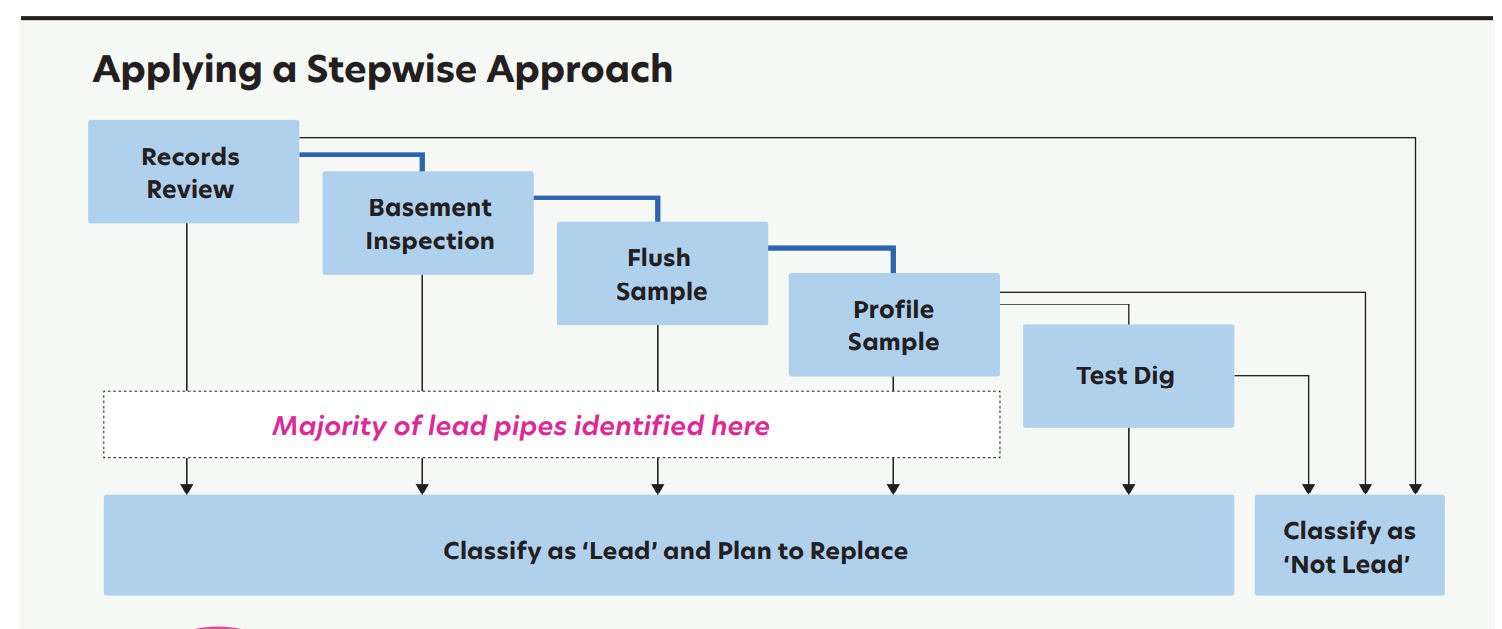
Lead service line replacement is a nontraditional, multiphase process that rewards careful planning. We begin by completing a desktop inventory of service lines in the water system to classify them as Lead, Not Lead, or Unknown. The draft revisions to the federal Lead and Copper Rule (LC2), if passed, will require any service line without a specific record indicating it does not contain lead to be considered Lead or Unknown. However, records alone can be unreliable. In most cases, both Not Lead and Unknown service lines will be the subject of identification work, such as observations and water sampling.
MSK coordinates with clients to develop a Lead Service Line Replacement Plan that aligns with other planned infrastructure improvements, such as road paving and water main replacement.
Funding
MSK approaches lead service line replacement funding strategically. We collaborate with our clients to secure funding during the scoping phase. Identifying funding early in the project relieves homeowner anxiety and results in a higher level of customer engagement with the project. Using this approach, we have seen outreach response rates increase dramatically, from less than 10% initially to 85–95% once replacement funding has been established. Read more about the MSK outreach approach here.
In 2019, MSK worked with the Town of Bennington to secure $11 million from the Vermont Drinking Water State Revolving Fund for system-wide lead service line identification and replacement. At the time, this was one of the largest single awards in the nation.
Mapping & Reporting
The system-wide inventory of lead service lines must be shared with the public. An interactive web map of the lead service line inventory can increase customer awareness and project participation. MSK has significant experience managing inventory data and producing GIS-based web maps that are accessible to all community members. Our interactive web map for the Bennington Lead Replacement Project can be viewed at www.bennington.org/lead.
We send direct mailings to residents and property owners to provide available information about service line pipe materials. As part of this outreach effort, MSK also provides a schedule of planned project phases, as well as educational resources that homeowners can use to reduce their exposure to lead in drinking water.
Outreach Campaign
MSK specializes in an evidence-based, remediation-forward approach to public outreach.
In most water systems, the service line is privately owned from the property line to the building. In order to complete lead service line identification and replacement work, a water system must engage with thousands of homeowners and residents.
We specialize in a remediation-forward approach to public outreach. Where possible, we establish a preliminary replacement program before completing identification work. This allows us to ask homeowners to sign up for remediation upfront, in the same letter in which we notify them that they might be at risk for lead exposure. We then provide specific recommendations for what to do while waiting for replacement, and we work to make the process as easy as possible. After developing this approach in 2019, we typically see response rates between 85% and 95%.
Sampling
MSK offers a reliable, cost-effective, and noninvasive process for identifying lead service lines. We know that water quality data is more reliable than records reviews and test dig observations. We use two sampling methods to identify service line pipe materials as Lead or Not Lead.
Flush Sampling
Flush sampling, at $35 / sample, is an affordable lead service line screening tool.
Lead detected → Lead service line
Lead not detected → Conduct sequential profile sampling
Sequential Profile Sampling
Sequential profile sampling, at approximately $350 / connection, permits reliable characterization of service line pipe materials. MSK conducts this process in stages:
(1) Carry out initial benchmark sampling in the community.
(2) Design sample kits based on each connection's pipe length & diameter.
(3) Deliver sample kits and instructions to residents.
(4) Analyze sample data to characterize pipe materials as Lead or Not Lead.
Data Analysis
We use flush samples as an initial screening tool to identify the presence of lead pipe. Flush samples are an affordable and easy way to collect information about pipe materials, and they do not require prestagnation. In instances where lead is not detected in flush samples, we conduct sequential profile sampling to fully characterize pipe materials from the foundation wall to the corporation stop.
Our data analysis methods have identified service lines that contain a relatively short segment of inaccessible buried lead pipe that was not observed during test digs. Similarly, our data analyses have identified lead service lines at locations where records indicated the service line pipes were not lead. Without water quality data analyses, these service lines and pipe materials would have been misidentified.
MSK's sampling methods are efficient, reliable, and affordable. They provide more accurate information than test excavations and review of historical records. The use of flush and sequential profile sampling allows us to efficiently and confidently identify pipe materials and prepare designs that will get the lead out.
Lead Detections in Flush Samples
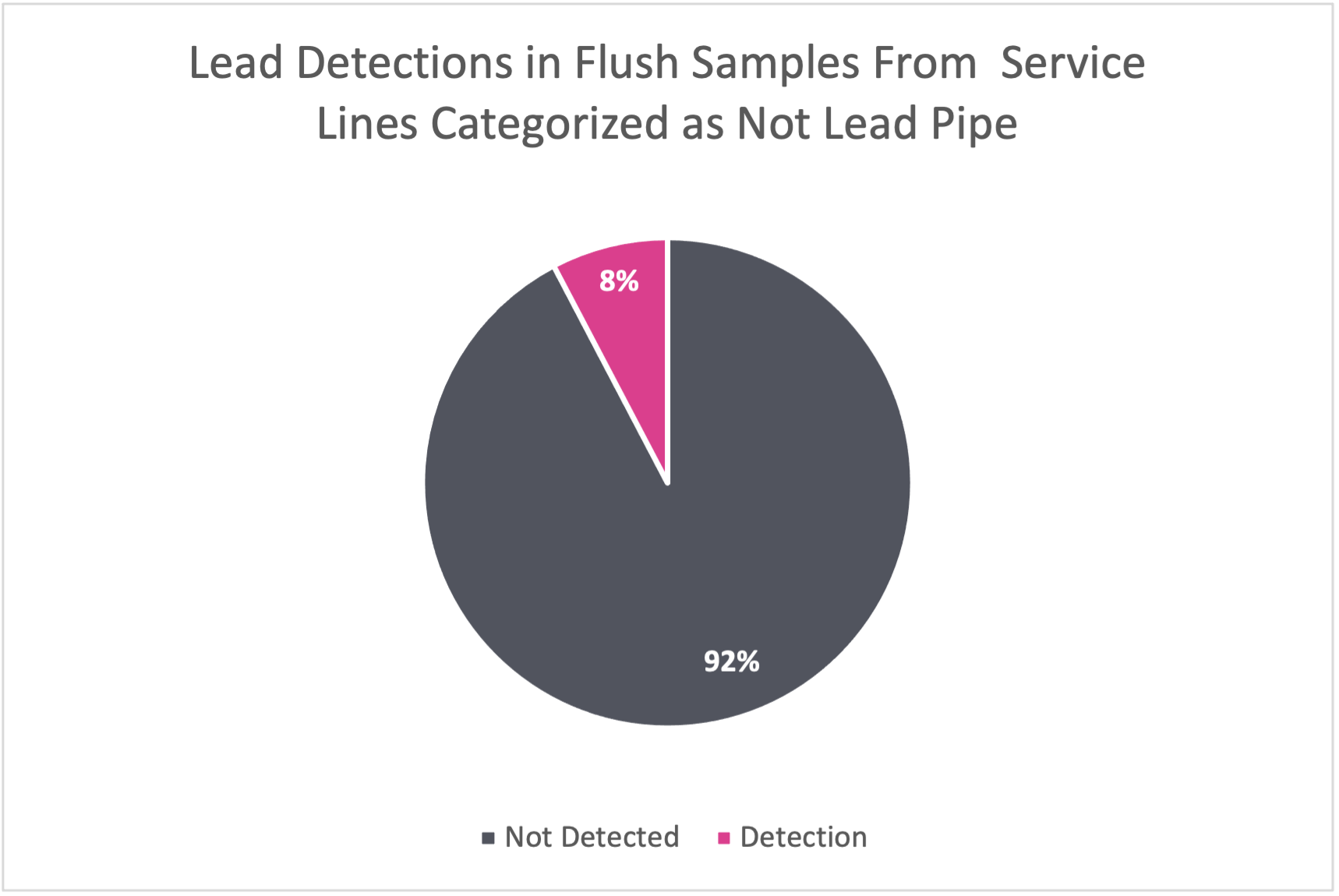
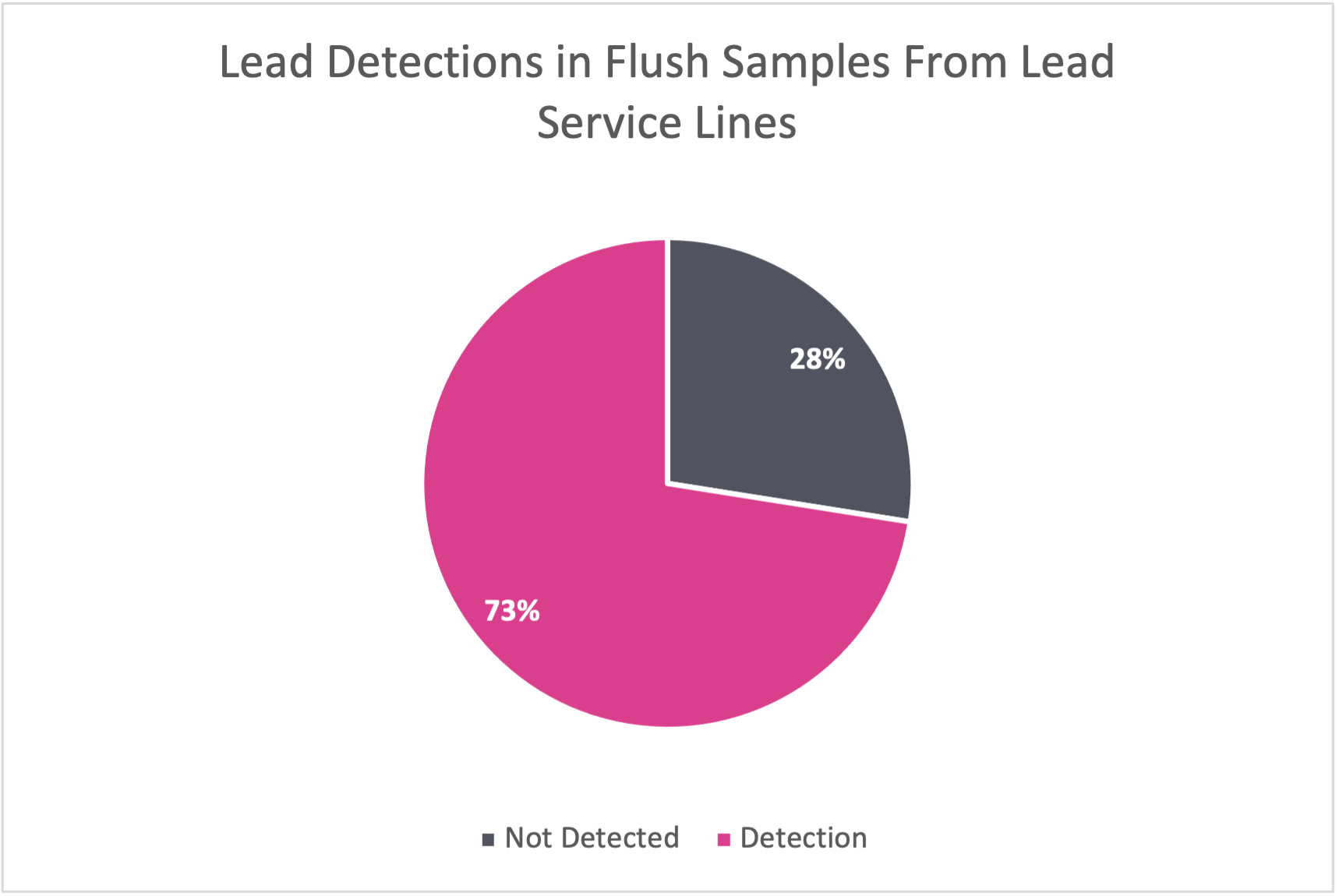
Detection of lead in a fush sample is a reliable indicator of a lead service line. Flush sampling is a fast, easy, and inexpensive screening tool that can be used to streamline the lead service line identification process. These pie charts show data from flush samples collected from service lines that are not lead (left) and from lead service lines (right).
Distribution of Lead Data from Sequential Profile Samples
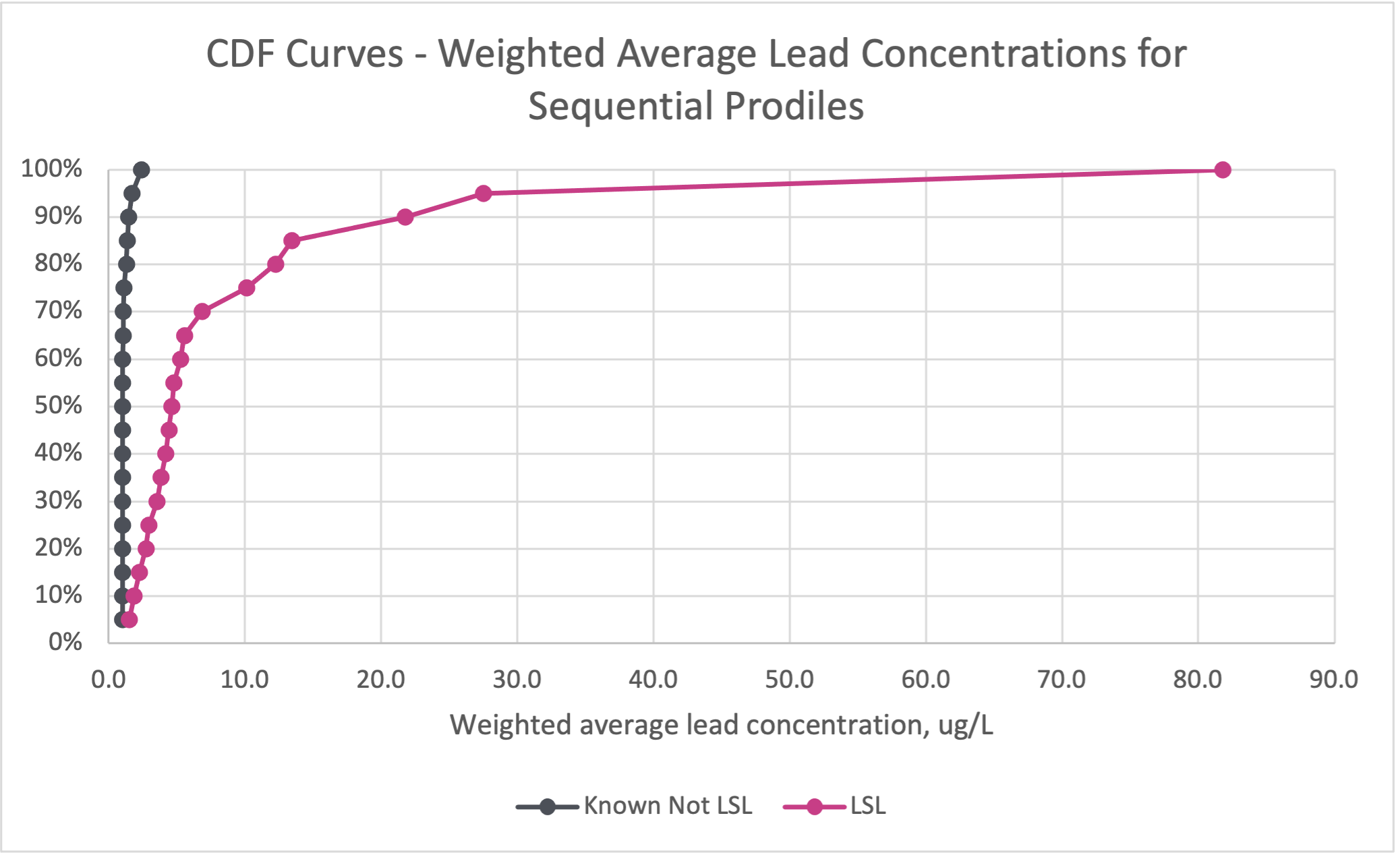
Lead data obtained from sequential profile samples are a reliable indicator of pipe materials. Data from service lines with at least a segment of lead pipe are distinct from data from service lines with pipe that is not lead.
Design & Permitting
We provide full engineering services throughout design, permitting, and construction administration for successful implementation of a Lead Service Line Replacement Plan. Our services are tailored to meet the needs of our clients and requirements of funding programs.
Construction
We are a full-service construction administration firm. Our services include construction observation, administration of construction contracts, review of requests for information, and assistance with the management of funding resources.
Follow-Up & Close-Out
Water systems must submit record drawings and documentation of service line replacement to funding authorities, the EPA, and the public. Following construction, we prepare record drawings to document construction activities and new service line locations. We prepare reports and documentation to meet our clients' needs and requirements of applicable regulations and funding programs.
The Bennington Lead Replacement Project
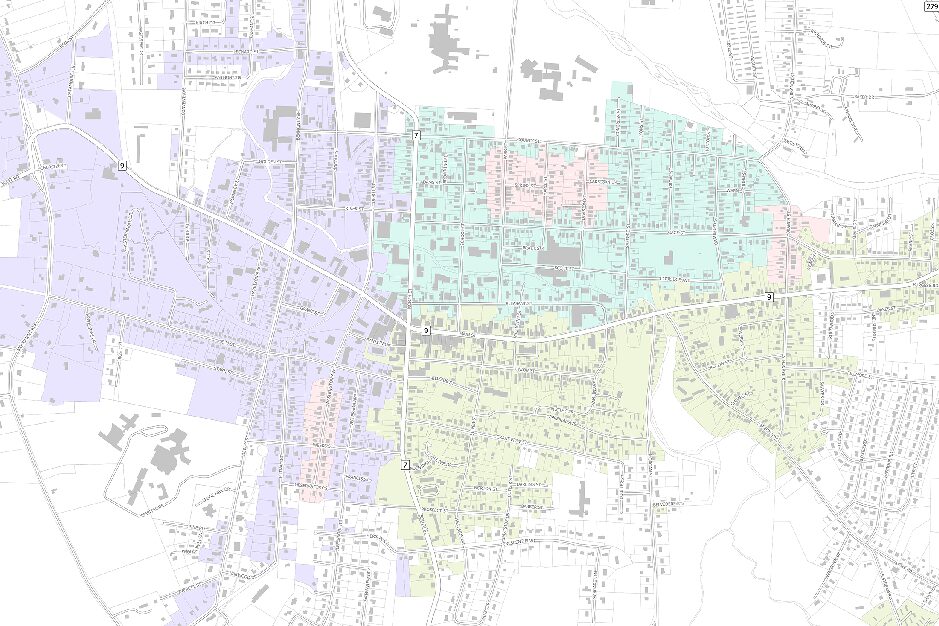
MSK Engineers has been working with the Town of Bennington, VT to map, identify, and remove lead service lines across the entire water system. Read about how we approached this nontraditional project here.
Homeowners and residents: To answer questions and see information about your property, visit www.benningtonvt.org/lead. Or, contact Liam McRae at 802-447-1402 Ext. 123, lmcrae@mskeng.com